



Pre- and postoperative communication with cataract patients and their family
Related content
Clear, compassionate patient education can improve safety, reduce anxiety, and support follow-up.
With the huge backlog in cataract surgery in low- and middle-income countries worldwide, there is often a lot of pressure on eye care workers to get cataract patients through the system as quickly and efficiently as possible.
However, there is a compelling case for taking time to communicate clearly and compassionately with cataract patients and their family members before and after surgery – for example, encouraging them to ask questions, and confirming their understanding of what you have explained. If the patient doesn’t feel respected, they will not have a good experience – and will be less likely to encourage friends and family members to come forward. Worse, they may not feel confident to ask questions or share important information – or come back for follow-up visits – which may have devastating clinical implications. Our patients are human beings. It can be helpful to ask ourselves if we would be happy for our own parent or family member to receive the quality of care we provide to others.

Before surgery
Give patients and their families advice and counselling about the operation, including what happens before, during and afterwards. They should then sign a consent form. It is our responsibility to ensure that the patient understands – in straightforward terms – what is going to happen and what this means for them and their eye health. Take time to address any fears, doubts, and myths about cataract surgery.
It is important to ensure that patients and their families have realistic expectations about their vision after surgery. Help them to understand the risks and benefits, including the potential effect of different complications on their eyesight. A disappointed patient is not a good advertisement for our service.
Patients have a vital role to play in alerting the eye team to potential postoperative complications at an early stage. Before surgery, explain to patients how their eyes will look and feel after a successful operation, including what level of discomfort is normal during the recovery stage. Encourage them to speak with an eye team member if they experience anything that concerns them. This can be repeated after surgery.
It is helpful to have a team member who speaks the patient’s language. This can help to increase their understanding of any information being shared and boost their trust in the eye service. Ask questions to confirm that the patient understands everything they have been told.
If operations take place in an outreach location, counselling may be in a group setting. This may reduce individualised care but provides an opportunity for patients to share experiences and coping strategies, which can reduce anxiety and improve compliance.
After surgery
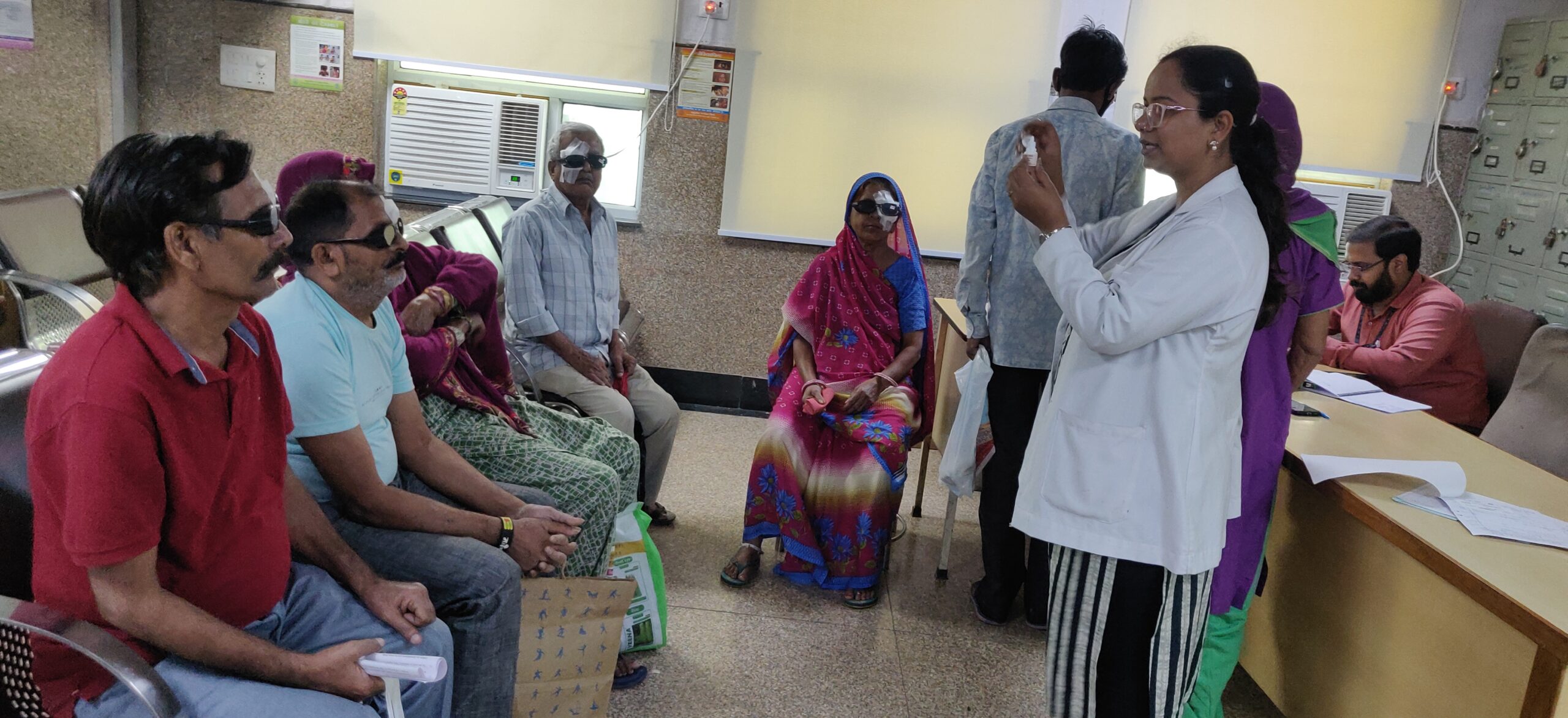
After the operation, give patients and family members verbal and written information about the following:
• How to look after their operated eye when they are back at home.
• When to come back for a follow-up appointment: where to go, at what time, and how to reschedule if needed.
• How the eye will look and feel after surgery – i.e., what is normal and expected.
• What warning signs or red flags to look out for: worsening sight, increasing pain, redness, swelling, or discharge (see panel) – and how to get in touch with the eye clinic or their surgeon if they have these signs or symptoms.
At discharge
Tell patients to bring all their eye drops to their follow-up appointments. Check that they have all of the following:
• Instruction sheet to take home
• Clinic contact details
• Eye shield (if available)
• Eye drops and instructions for storage and use
• Painkillers to use at home
• A follow-up appointment date and time.
Adapted from Adekhera E, Nyamai LA, Astbury N. Pre- and postoperative communication with cataract patients, volume 29 issue 94, 2016. Substantially revised. bit.ly/cehj433